INDUSTRY TRENDS
Stop Pretending Pharmacists Can't Meet Primary Care Needs
Stop Pretending Pharmacists Can't Meet Primary Care Needs
Stop Pretending Pharmacists Can't Meet Primary Care Needs
Stop Pretending Pharmacists Can't Meet Primary Care Needs


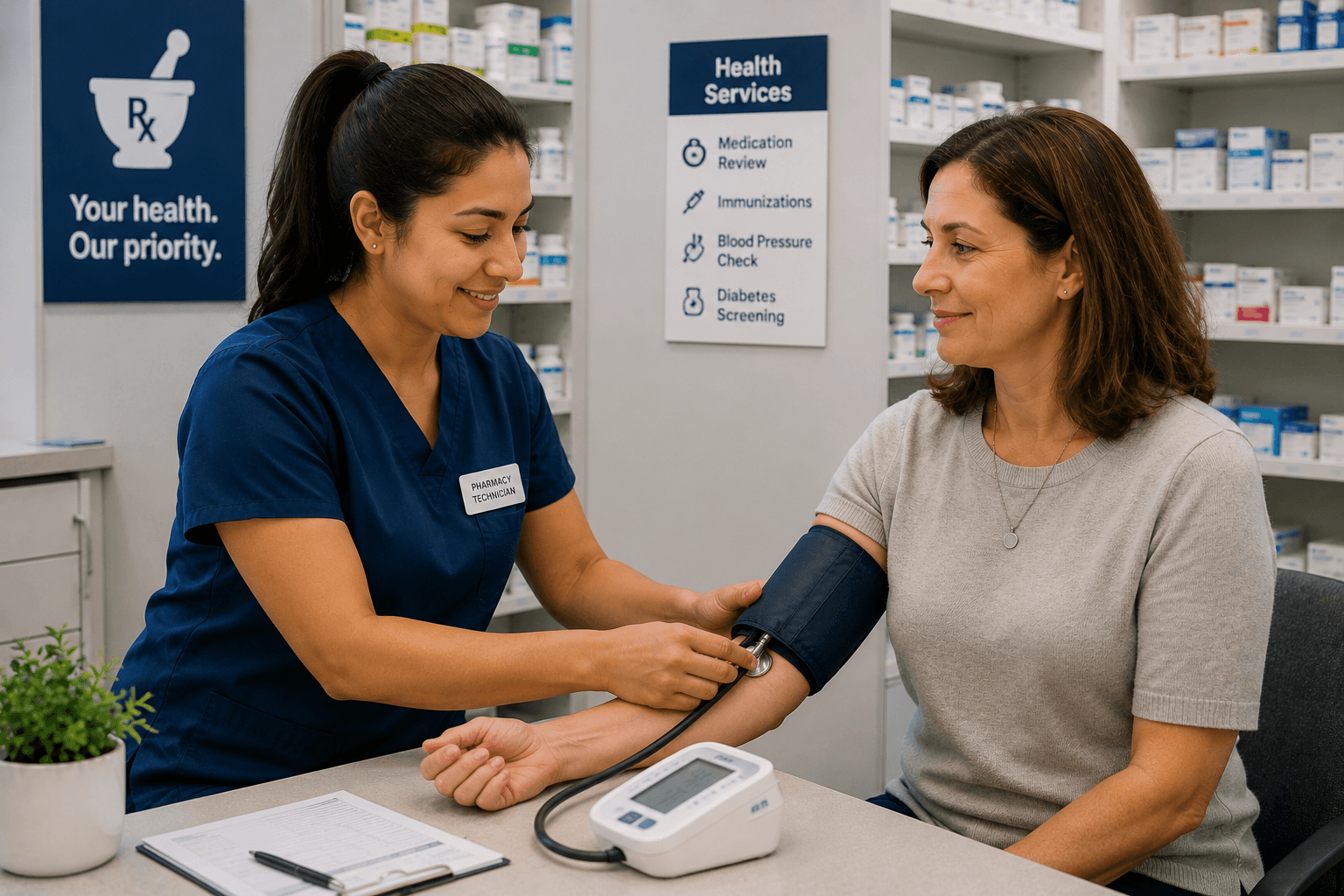
I remember standing in the compounding room at 11 AM on a Tuesday when a patient came to the counter asking for help with her blood pressure. She didn't have an appointment with her doctor for another six weeks. Her numbers were climbing. She was frustrated. Back when I was behind the counter, the pharmacist would walk up, spend twenty minutes with her, ask about her compliance, her diet, her stress levels, and adjust her medication timing. The patient felt heard, her pressure stabilized, and she didn't have to wait six weeks to get support.
That moment crystallized something that healthcare keeps refusing to admit out loud: pharmacists are already meeting primary care needs. The question isn't whether they can. The question is whether we're going to acknowledge it, support it, and let pharmacy teams scale it.
Here's the truth I want us to say out loud together: the United States has a primary care crisis, and 90% of Americans live within five miles of a pharmacy. We have over 300,000 licensed pharmacists working in over 65,000 community pharmacies, yet outdated practice laws prevent them from diagnosing and prescribing. The gap between capacity and scope is killing us.
But there's a deeper story here that matters to pharmacy technicians. When pharmacists practice at the top of their license, it creates space for pharmacy technicians to step up and fill broader roles. The clinical evolution of pharmacy elevates everyone. And techs who understand this shift can position themselves right now as clinical support experts, community health workers, and patient care coordinators.
The Primary Care Crisis Is Real, And Pharmacies Are Already Filling It
The numbers tell part of the story. The United States faces a crushing shortage of primary care physicians. The Association of American Medical Colleges projects a shortfall of 86,000 primary care doctors by 2036. Meanwhile, patient wait times stretch to eight, ten, twelve weeks to see someone. Walk-in clinics overflow. Hospital emergency departments are clogged with patients who couldn't access preventive care.
Patients are desperate. And they're turning to pharmacies.
I see this every single day in conversations with our RxPost community. Pharmacists are fielding medication questions that have turned into lifestyle conversations. They're catching hypertension that a patient didn't know they had. They're identifying drug interactions that a patient's three different doctors didn't coordinate around. They're counseling on diabetes management, GERD prevention, smoking cessation. They're doing the work of primary care because patients need it and trust them.
The problem isn't capacity. It's permission.
Most state practice laws were written in an era when pharmacists were considered medication counters, not clinicians. Those laws are broken. And the broken laws are preventing us from using the clinical workforce we already have.
Some states have started to fix this. The American Pharmacists Association (APhA) has been pushing scope of practice expansion across all fifty states. Some states now allow pharmacists to initiate and manage chronic disease medications. Some allow them to order and interpret lab work. Some have collaborative practice agreements that formalize the relationship between pharmacists and physicians. But this is patchwork. And it's slow.
Meanwhile, patients keep waiting six weeks for an appointment to get their blood pressure checked.
The clinical evolution of pharmacy isn't coming. It's here. The legal framework is just catching up.
What Clinical Expansion Looks Like For The Pharmacy Team
Here's what most people miss: when pharmacists practice at the top of their license, the entire pharmacy team elevates.
The traditional pharmacy workflow is built on the assumption that pharmacists are verifiers and techs are handlers. Pharmacist checks the prescription, tech counts the pills, tech bags it, cashier rings it. It's efficient for high-volume, low-complexity work. It's not efficient for a practice that includes medication therapy management, chronic disease management, or complex medication consultation.
When a pharmacy shifts to clinical services, the workflow transforms.
The pharmacist becomes a clinician. They're seeing patients for consultations, reviewing medication histories, identifying therapy gaps, making recommendations, and sometimes prescribing within their scope. This is high-value, high-touch work that requires clinical judgment and communication skills.
That work creates space for technicians to do something different.
The technician becomes a clinical support expert. They're supporting the pharmacist's consultations by gathering patient histories, taking vital signs, documenting clinical conversations, managing the administrative side of MTM (medication therapy management) programs, coordinating with other providers, and ensuring follow-up. In some pharmacies, technicians are becoming certified as community health workers, which is an even bigger leap.
I've seen this transformation happen at a partner pharmacy in Southern California. The owner, Katherine, decided that she wanted to build a clinical practice around chronic disease management. She kept her core dispensing operation running, but she carved out time on her schedule for patient consultations. She hired a pharmacy tech, who had completed his CPHT and was thinking about pharmacy school but hadn't committed yet.
Katherine gave her technician a specific mandate: "You're going to be my clinical support specialist. I need you to understand how we're going to manage these consultations."
Over six months, her pharmacy technician learned how to take patient medication histories, how to document clinical conversations, how to flag potential drug interactions, how to prepare summary documents for physicians. She became the backbone of the operation. When Katherina had a consultation with a patient taking eight medications, her pharmacy technician was the one who had already gathered the history, organized the information, and flagged the questions.
That freed Katherine to focus on clinical decision-making. And her pharmacy technician developed skills that made her more valuable, more engaged, and more positioned for whatever came next in her career, whether that was pharmacy school or building her own clinical pharmacy consulting practice.

This is what clinical expansion looks like when it works. It's not just the pharmacist doing more. It's the entire team stepping up.
How Techs Can Position Themselves Now
The clinical evolution of pharmacy isn't waiting for policy changes anymore. It's happening now, even in the states where the laws are slowest to change. And techs who position themselves strategically are going to be the ones leading this shift.
Here are three concrete ways to start positioning yourself today.
First: Understand your state's collaborative practice agreement laws.
Not every state has them yet. But many do, and more are coming. A collaborative practice agreement (CPA) is basically a formal relationship between a pharmacist and one or more physicians that outlines what the pharmacist can do. In some states, a CPA allows the pharmacist to initiate and manage hypertension medications. In others, it allows them to prescribe antibiotics within specific parameters. In others, it allows them to adjust insulin doses.
The point is this: these agreements are creating the legal framework for expanded pharmacy practice right now. And as a pharmacy tech, you need to know whether your pharmacy already has one, and what it allows. Because if your pharmacist is going to be practicing under a CPA, you need to understand what clinical services are coming.
This week, look up your state pharmacy board website and search for "collaborative practice agreement." See if your state has them. Then ask your pharmacist or pharmacy owner whether your pharmacy has any existing agreements or is considering them.
Second: Explore community health worker certification.
A community health worker (CHW) is someone who acts as a liaison between healthcare providers and the community they serve. CHWs provide health education, help patients navigate the healthcare system, support chronic disease management, and often serve as cultural brokers.
For a pharmacy technician, CHW certification is a beautiful bridge. It gives you a credential that sits between a tech and a clinical role. Some states have established CHW certification programs. New York has one. Texas has one. Others are developing them.
If your state has a CHW program, look into it. The coursework usually takes three to six months, and it costs between $500 and $2,000. But you come out of it with a state-recognized credential that makes you more valuable in a clinical pharmacy setting.
Even if your state doesn't have a formal CHW certification yet, the competencies are clear. You can start learning them. Take online courses on health literacy, chronic disease management, patient communication, and care coordination. Build your skills now, and the credential will follow.
Third: Ask to be involved in medication therapy management and clinical services.
If your pharmacy offers MTM or any clinical services, ask to be part of it. Ask to shadow consultations. Ask to learn how to take vital signs. Ask to help organize patient records for clinical visits. Ask to understand the documentation and billing side.
This is where innovation meets patient care. When you're part of these conversations, you're building clinical knowledge that makes you more valuable and more positioned for whatever comes next, whether that's a bigger clinical role at your current pharmacy, a move to a clinical pharmacy consulting practice, or pharmacy school.
MTM work is also where the business case becomes clear. You'll see how a patient with uncontrolled diabetes becomes a patient with controlled diabetes and fewer hospitalizations. You'll see how a patient on five unnecessary medications becomes a patient on two that actually work. You'll see how clinical pharmacy services create loyalty and retention that pure dispensing never does.
This matters because when you understand the business case, you can make the entrepreneurial case for why your pharmacy should invest in clinical services.
The Broader Context: Practicing At The Top Of Your License
The phrase "practicing at the top of your license" gets used a lot in healthcare, but it's worth defining clearly. It means doing the most complex, valuable work that your credentials allow. It means not letting unnecessary tasks or workflows pull you down into work that doesn't require your training.
For pharmacists, the top of the license is clinical judgment. It's knowing pharmacology deep enough to catch interactions that patients' doctors missed. It's understanding disease pathophysiology well enough to recognize when a therapy isn't working. It's being the person in the community who knows medication best.
For pharmacy technicians, the top of the license is expanding as the practice expands. Five years ago, the top of the license might have meant verifying that a tech counted correctly, managing the workflow, and supporting the pharmacist's dispensing work. Today, it's increasingly including clinical support. And in ten years, it'll probably include roles we can't quite imagine yet.
The point is this: when we talk about pharmacists practicing at the top of their license, we're not leaving technicians behind. We're creating the conditions for everyone to do more valuable work.
This is where innovation meets patient care and business growth. Better outcomes, happier staff, stronger patient relationships, and a more sustainable pharmacy business. It's all connected.
Practical Steps To Take This Week, This Month, And This Quarter
This week: Look up your state pharmacy board website and find the section on collaborative practice agreements or scope of practice expansion. If your state has CPAs, read through the requirements. If not, look at what neighboring states are doing. Take one note about what expanded scope is possible in your state.
This month: Schedule a conversation with your pharmacist or pharmacy owner about clinical services. Don't come in with demands. Come in curious. Ask questions like: "Are there any clinical services we're doing or considering? What would it take to expand?" Listen to what they're thinking about. If they're already doing clinical work, ask if you can be involved. If they haven't thought about it, plant the seed.
By end of quarter: Explore CPhA's clinical resources for pharmacy technicians. The California Pharmacists Association has training on medication therapy management, chronic disease management, and other clinical services that techs can support. Even if you're in another state, you can access these resources and start building your clinical knowledge.
The Closing Truth
The primary care crisis is real. Patients are suffering. And the healthcare system keeps pretending that pharmacists can't help when everyone in healthcare knows they already are.
The clinical evolution of pharmacy is happening now. The question for you, as a pharmacy technician, is whether you're going to position yourself as part of that shift. The pharmacists who practice at the top of their license need clinical support experts. The pharmacies that build clinical services need techs who understand how those services work.
Here's the deeper truth: we are not "just techs." We're the backbone of pharmacy operations. And when those operations shift toward clinical services, we're the ones who can make them work. That's where entrepreneurial thinking comes in. That's where we step up and say, "I understand what's happening. I can support it. I can build on it. I can lead it."
The pharmacy desert is growing. The primary care crisis is deepening. And yet, within five miles of 90% of American patients, there's a pharmacy with clinical expertise. The question isn't whether pharmacists can meet primary care needs. The question is whether we're going to build the systems and teams to let them.
You're positioned to be part of that answer. Position yourself to lead it.
Subscribe + Follow
Want to stay ahead of pharmacy practice shifts? Subscribe to The Entrepreneurial Pharm Tech newsletter for monthly insights on scope of practice expansion, clinical services, and career growth for pharmacy technicians.
Follow RxPost on social media to see how independent pharmacies are building clinical services, managing their inventory smarter, and growing their business.
Connect with your CPhA chapter to access training resources on clinical services and find community with other pharmacy professionals thinking about this shift.
Learn more about clinical pharmacy practice through the American Pharmacists Association (APhA) and explore pharmacy-to-pharmacy sourcing that supports clinical expansion with RxPost.
I remember standing in the compounding room at 11 AM on a Tuesday when a patient came to the counter asking for help with her blood pressure. She didn't have an appointment with her doctor for another six weeks. Her numbers were climbing. She was frustrated. Back when I was behind the counter, the pharmacist would walk up, spend twenty minutes with her, ask about her compliance, her diet, her stress levels, and adjust her medication timing. The patient felt heard, her pressure stabilized, and she didn't have to wait six weeks to get support.
That moment crystallized something that healthcare keeps refusing to admit out loud: pharmacists are already meeting primary care needs. The question isn't whether they can. The question is whether we're going to acknowledge it, support it, and let pharmacy teams scale it.
Here's the truth I want us to say out loud together: the United States has a primary care crisis, and 90% of Americans live within five miles of a pharmacy. We have over 300,000 licensed pharmacists working in over 65,000 community pharmacies, yet outdated practice laws prevent them from diagnosing and prescribing. The gap between capacity and scope is killing us.
But there's a deeper story here that matters to pharmacy technicians. When pharmacists practice at the top of their license, it creates space for pharmacy technicians to step up and fill broader roles. The clinical evolution of pharmacy elevates everyone. And techs who understand this shift can position themselves right now as clinical support experts, community health workers, and patient care coordinators.
The Primary Care Crisis Is Real, And Pharmacies Are Already Filling It
The numbers tell part of the story. The United States faces a crushing shortage of primary care physicians. The Association of American Medical Colleges projects a shortfall of 86,000 primary care doctors by 2036. Meanwhile, patient wait times stretch to eight, ten, twelve weeks to see someone. Walk-in clinics overflow. Hospital emergency departments are clogged with patients who couldn't access preventive care.
Patients are desperate. And they're turning to pharmacies.
I see this every single day in conversations with our RxPost community. Pharmacists are fielding medication questions that have turned into lifestyle conversations. They're catching hypertension that a patient didn't know they had. They're identifying drug interactions that a patient's three different doctors didn't coordinate around. They're counseling on diabetes management, GERD prevention, smoking cessation. They're doing the work of primary care because patients need it and trust them.
The problem isn't capacity. It's permission.
Most state practice laws were written in an era when pharmacists were considered medication counters, not clinicians. Those laws are broken. And the broken laws are preventing us from using the clinical workforce we already have.
Some states have started to fix this. The American Pharmacists Association (APhA) has been pushing scope of practice expansion across all fifty states. Some states now allow pharmacists to initiate and manage chronic disease medications. Some allow them to order and interpret lab work. Some have collaborative practice agreements that formalize the relationship between pharmacists and physicians. But this is patchwork. And it's slow.
Meanwhile, patients keep waiting six weeks for an appointment to get their blood pressure checked.
The clinical evolution of pharmacy isn't coming. It's here. The legal framework is just catching up.
What Clinical Expansion Looks Like For The Pharmacy Team
Here's what most people miss: when pharmacists practice at the top of their license, the entire pharmacy team elevates.
The traditional pharmacy workflow is built on the assumption that pharmacists are verifiers and techs are handlers. Pharmacist checks the prescription, tech counts the pills, tech bags it, cashier rings it. It's efficient for high-volume, low-complexity work. It's not efficient for a practice that includes medication therapy management, chronic disease management, or complex medication consultation.
When a pharmacy shifts to clinical services, the workflow transforms.
The pharmacist becomes a clinician. They're seeing patients for consultations, reviewing medication histories, identifying therapy gaps, making recommendations, and sometimes prescribing within their scope. This is high-value, high-touch work that requires clinical judgment and communication skills.
That work creates space for technicians to do something different.
The technician becomes a clinical support expert. They're supporting the pharmacist's consultations by gathering patient histories, taking vital signs, documenting clinical conversations, managing the administrative side of MTM (medication therapy management) programs, coordinating with other providers, and ensuring follow-up. In some pharmacies, technicians are becoming certified as community health workers, which is an even bigger leap.
I've seen this transformation happen at a partner pharmacy in Southern California. The owner, Katherine, decided that she wanted to build a clinical practice around chronic disease management. She kept her core dispensing operation running, but she carved out time on her schedule for patient consultations. She hired a pharmacy tech, who had completed his CPHT and was thinking about pharmacy school but hadn't committed yet.
Katherine gave her technician a specific mandate: "You're going to be my clinical support specialist. I need you to understand how we're going to manage these consultations."
Over six months, her pharmacy technician learned how to take patient medication histories, how to document clinical conversations, how to flag potential drug interactions, how to prepare summary documents for physicians. She became the backbone of the operation. When Katherina had a consultation with a patient taking eight medications, her pharmacy technician was the one who had already gathered the history, organized the information, and flagged the questions.
That freed Katherine to focus on clinical decision-making. And her pharmacy technician developed skills that made her more valuable, more engaged, and more positioned for whatever came next in her career, whether that was pharmacy school or building her own clinical pharmacy consulting practice.
This is what clinical expansion looks like when it works. It's not just the pharmacist doing more. It's the entire team stepping up.
How Techs Can Position Themselves Now
The clinical evolution of pharmacy isn't waiting for policy changes anymore. It's happening now, even in the states where the laws are slowest to change. And techs who position themselves strategically are going to be the ones leading this shift.
Here are three concrete ways to start positioning yourself today.
First: Understand your state's collaborative practice agreement laws.
Not every state has them yet. But many do, and more are coming. A collaborative practice agreement (CPA) is basically a formal relationship between a pharmacist and one or more physicians that outlines what the pharmacist can do. In some states, a CPA allows the pharmacist to initiate and manage hypertension medications. In others, it allows them to prescribe antibiotics within specific parameters. In others, it allows them to adjust insulin doses.
The point is this: these agreements are creating the legal framework for expanded pharmacy practice right now. And as a pharmacy tech, you need to know whether your pharmacy already has one, and what it allows. Because if your pharmacist is going to be practicing under a CPA, you need to understand what clinical services are coming.
This week, look up your state pharmacy board website and search for "collaborative practice agreement." See if your state has them. Then ask your pharmacist or pharmacy owner whether your pharmacy has any existing agreements or is considering them.
Second: Explore community health worker certification.
A community health worker (CHW) is someone who acts as a liaison between healthcare providers and the community they serve. CHWs provide health education, help patients navigate the healthcare system, support chronic disease management, and often serve as cultural brokers.
For a pharmacy technician, CHW certification is a beautiful bridge. It gives you a credential that sits between a tech and a clinical role. Some states have established CHW certification programs. New York has one. Texas has one. Others are developing them.
If your state has a CHW program, look into it. The coursework usually takes three to six months, and it costs between $500 and $2,000. But you come out of it with a state-recognized credential that makes you more valuable in a clinical pharmacy setting.
Even if your state doesn't have a formal CHW certification yet, the competencies are clear. You can start learning them. Take online courses on health literacy, chronic disease management, patient communication, and care coordination. Build your skills now, and the credential will follow.
Third: Ask to be involved in medication therapy management and clinical services.
If your pharmacy offers MTM or any clinical services, ask to be part of it. Ask to shadow consultations. Ask to learn how to take vital signs. Ask to help organize patient records for clinical visits. Ask to understand the documentation and billing side.
This is where innovation meets patient care. When you're part of these conversations, you're building clinical knowledge that makes you more valuable and more positioned for whatever comes next, whether that's a bigger clinical role at your current pharmacy, a move to a clinical pharmacy consulting practice, or pharmacy school.
MTM work is also where the business case becomes clear. You'll see how a patient with uncontrolled diabetes becomes a patient with controlled diabetes and fewer hospitalizations. You'll see how a patient on five unnecessary medications becomes a patient on two that actually work. You'll see how clinical pharmacy services create loyalty and retention that pure dispensing never does.
This matters because when you understand the business case, you can make the entrepreneurial case for why your pharmacy should invest in clinical services.
The Broader Context: Practicing At The Top Of Your License
The phrase "practicing at the top of your license" gets used a lot in healthcare, but it's worth defining clearly. It means doing the most complex, valuable work that your credentials allow. It means not letting unnecessary tasks or workflows pull you down into work that doesn't require your training.
For pharmacists, the top of the license is clinical judgment. It's knowing pharmacology deep enough to catch interactions that patients' doctors missed. It's understanding disease pathophysiology well enough to recognize when a therapy isn't working. It's being the person in the community who knows medication best.
For pharmacy technicians, the top of the license is expanding as the practice expands. Five years ago, the top of the license might have meant verifying that a tech counted correctly, managing the workflow, and supporting the pharmacist's dispensing work. Today, it's increasingly including clinical support. And in ten years, it'll probably include roles we can't quite imagine yet.
The point is this: when we talk about pharmacists practicing at the top of their license, we're not leaving technicians behind. We're creating the conditions for everyone to do more valuable work.
This is where innovation meets patient care and business growth. Better outcomes, happier staff, stronger patient relationships, and a more sustainable pharmacy business. It's all connected.
Practical Steps To Take This Week, This Month, And This Quarter
This week: Look up your state pharmacy board website and find the section on collaborative practice agreements or scope of practice expansion. If your state has CPAs, read through the requirements. If not, look at what neighboring states are doing. Take one note about what expanded scope is possible in your state.
This month: Schedule a conversation with your pharmacist or pharmacy owner about clinical services. Don't come in with demands. Come in curious. Ask questions like: "Are there any clinical services we're doing or considering? What would it take to expand?" Listen to what they're thinking about. If they're already doing clinical work, ask if you can be involved. If they haven't thought about it, plant the seed.
By end of quarter: Explore CPhA's clinical resources for pharmacy technicians. The California Pharmacists Association has training on medication therapy management, chronic disease management, and other clinical services that techs can support. Even if you're in another state, you can access these resources and start building your clinical knowledge.
The Closing Truth
The primary care crisis is real. Patients are suffering. And the healthcare system keeps pretending that pharmacists can't help when everyone in healthcare knows they already are.
The clinical evolution of pharmacy is happening now. The question for you, as a pharmacy technician, is whether you're going to position yourself as part of that shift. The pharmacists who practice at the top of their license need clinical support experts. The pharmacies that build clinical services need techs who understand how those services work.
Here's the deeper truth: we are not "just techs." We're the backbone of pharmacy operations. And when those operations shift toward clinical services, we're the ones who can make them work. That's where entrepreneurial thinking comes in. That's where we step up and say, "I understand what's happening. I can support it. I can build on it. I can lead it."
The pharmacy desert is growing. The primary care crisis is deepening. And yet, within five miles of 90% of American patients, there's a pharmacy with clinical expertise. The question isn't whether pharmacists can meet primary care needs. The question is whether we're going to build the systems and teams to let them.
You're positioned to be part of that answer. Position yourself to lead it.
Subscribe + Follow
Want to stay ahead of pharmacy practice shifts? Subscribe to The Entrepreneurial Pharm Tech newsletter for monthly insights on scope of practice expansion, clinical services, and career growth for pharmacy technicians.
Follow RxPost on social media to see how independent pharmacies are building clinical services, managing their inventory smarter, and growing their business.
Connect with your CPhA chapter to access training resources on clinical services and find community with other pharmacy professionals thinking about this shift.
Learn more about clinical pharmacy practice through the American Pharmacists Association (APhA) and explore pharmacy-to-pharmacy sourcing that supports clinical expansion with RxPost.
Stay Ahead with RxPost Updates
Join our newsletter to receive the latest industry insights, compliance tips, and pharmacy growth strategies straight to your inbox.
Stay Ahead with RxPost Updates
Join our newsletter to receive the latest industry insights, compliance tips, and pharmacy growth strategies straight to your inbox.
Stay Ahead with RxPost Updates
Join our newsletter to receive the latest industry insights, compliance tips, and pharmacy growth strategies straight to your inbox.
Stay Ahead with RxPost Updates
Join our newsletter to receive the latest industry insights, compliance tips, and pharmacy growth strategies straight to your inbox.
Stay Ahead with RxPost Updates
Join our newsletter to receive the latest industry insights, compliance tips, and pharmacy growth strategies straight to your inbox.
RxPost
Obsessed with delivering innovative solutions that maximize efficiencies for a healthier business.
DSCSA
Compliant
Copyright © 2026 RxPost All Right Reserved.
RxPost
Obsessed with delivering innovative solutions that maximize efficiencies for a healthier business.
DSCSA
Compliant
Copyright © 2026 RxPost All Right Reserved.
RxPost
Obsessed with delivering innovative solutions that maximize efficiencies for a healthier business.
DSCSA
Compliant
Copyright © 2026 RxPost All Right Reserved.
RxPost
Obsessed with delivering innovative solutions that maximize efficiencies for a healthier business.
DSCSA
Compliant
Copyright © 2026 RxPost All Right Reserved.
RxPost
Obsessed with delivering innovative solutions that maximize efficiencies for a healthier business.
DSCSA
Compliant
Copyright © 2026 RxPost All Right Reserved.