REGULATORY UPDATES
DTC GLP-1 Models: New Wrapper, Same Drug Costs | RxPost
DTC GLP-1 Models: New Wrapper, Same Drug Costs | RxPost
DTC GLP-1 Models: New Wrapper, Same Drug Costs | RxPost
DTC GLP-1 Models: New Wrapper, Same Drug Costs | RxPost

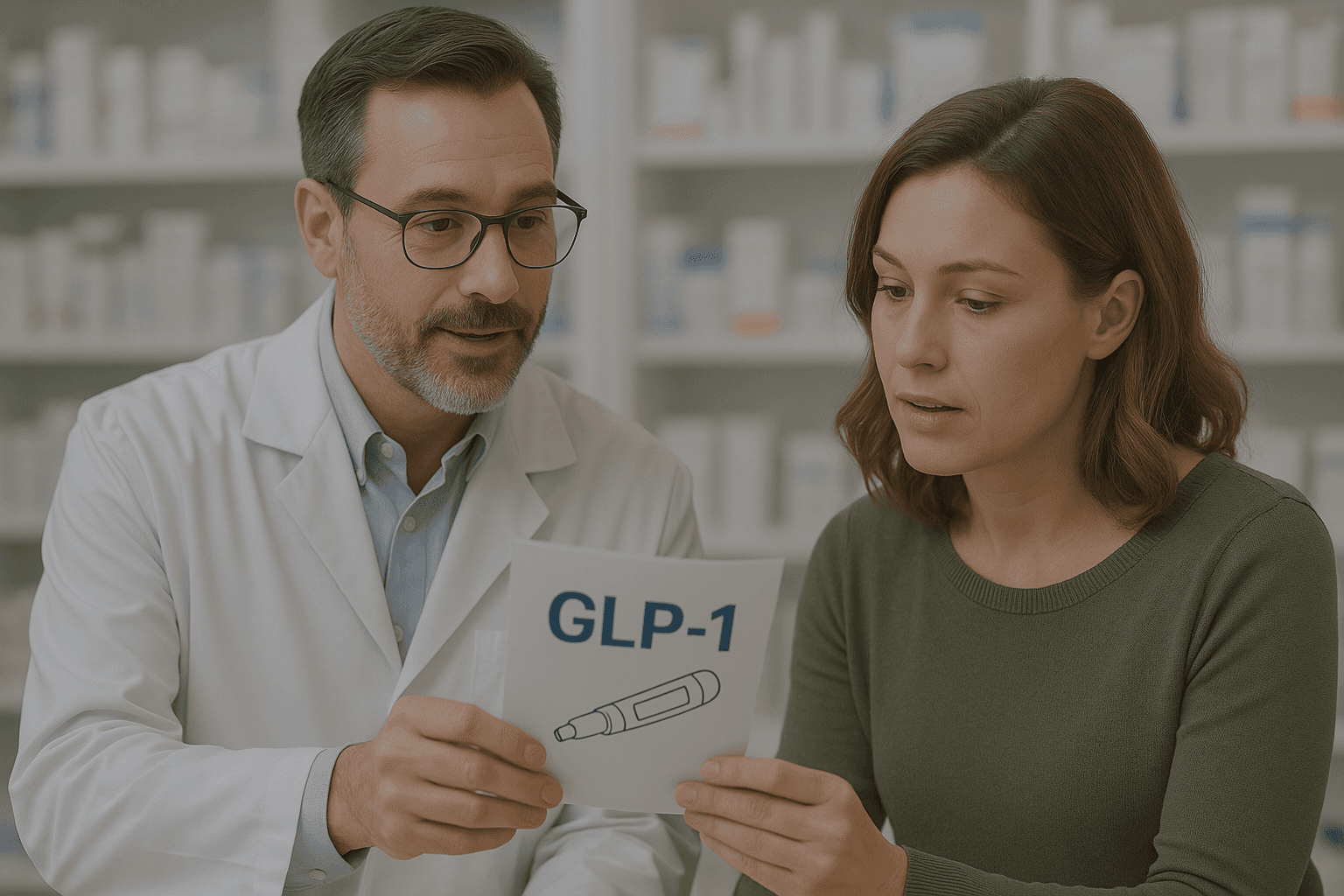
New Wrapper, Same Costs: Why DTC Employer-Subsidized GLP-1 Models Aren't Real Reform
Imagine you walk into a convenience store. On the shelf there sits a candy bar you’ve seen a thousand times—same chocolate, same almonds, same caramel filling. But this time it comes in a flashy new wrapper. The marketing boasts “Premium Edition”, “Limited Release”, “Better Experience”. Yet when you unwrap it, you find exactly the same bar you've always known. If it walks like a candy bar and quacks like a candy bar, chances are… well, it's still just a candy bar.
In many ways, that metaphor captures what’s happening with the so-called novel direct-to-consumer (DTC) drug sale models that ask employers to subsidies the cost of high-profile medications like GLP-1s in obesity and other therapeutic areas. These models don’t necessarily transform the underlying economics or the supply chain—they simply repackage existing cost-shuffling strategies under a trendier wrapper. And while there’s a genuine appetite for reform of pharmacy benefit managers (PBMs), channel intermediaries and high drug acquisition costs, this new wrapper doesn’t guarantee real change.
In this blog article, we’ll walk through what DTC pharmacy models are, the challenges they pose (including logistics and risks of over-prescribing), and why the best way to bring drug costs down is via lowering acquisition cost for dispensing pharmacies, not just rejiggering payment flows. We'll also show why marketplace-based models like the one from RxPost—enabling pharmacy-to-pharmacy inventory and below-WAC purchases—address the root supply-chain issue. All told: if it walks like a duck and quacks like a duck, it’s probably just a duck.
What is a direct-to-consumer (DTC) pharmacy/drug model?
In brief: DTC pharmacy or drug models aim to sell medications directly to patients in cash-pay or subsidized cash arrangements, bypassing (or reducing the role of) traditional insurance coverage and the PBM-managed pharmacy benefit. The recent twist: employer-sponsored benefit startups are pitching models where employers subsidies cash-pay pricing rather than include the drug in the standard insurance formulary.
For example, a recent article from STAT News explains how startups are offering employers a way to pay less than they would via insurance by having employees buy certain medications in a cash-pay channel, with employer subsidies.
In other words, the employer says: “We won’t cover GLP-1s in your insurance plan (too expensive). But we’ll subsidies your private cash purchase so you pay less than full cash price, and we hope we pay less than what we would via insurance.” Meanwhile, the drugmaker may offer direct-to-consumer cash pricing for its brand drug (e.g., about ~$500 per month for GLP-1s) rather than going through insurance.
From the pharmacy’s vantage point, this is a shift in payment channel: instead of the pharmacy billing an insurance plan via the PBM, the pharmacy may be dispensing via cash or a subsidy-card channel.
So the traffic is: Employer pays subsidy → Employee pays cash channel (possibly via telehealth/online direct drug sale) → Pharmacy dispenses. All under a glossier banner.
What are the challenges of the DTC pharmaceutical model?
Let’s highlight key issues — logistics, costs, and over-prescription risk — and why they matter in the broader conversation of lowering drug cost and integrated supply chain.
1. Logistics & channel complexity
When you move away from standard insurance claims and PBM-led dispensing, you add complexity: cash claim tracking, subsidy cards, alternate supply channels, direct-to-manufacturer distribution, maybe telehealth prescribing, home delivery. Each new channel brings overhead, transitional cost and potential inefficiency. For employers, that might mean “we pay less on paper” but you still accumulate administrative burden (and perhaps more risk). The STAT article notes some industry skepticism that this model truly improves access or simplifies things.
Furthermore, the standard prescription ecosystem (provider → pharmacy → insurer/PBM) has many built-in checks, formularies, prior‐authorization, cost-sharing caps, etc. When you swap in a DTC cash/subsidy model you may lose some of those guardrails. That can affect patient safety, adherence follow-through, continuity of care.
2. Over-prescription / inappropriate prescribing risk
If you open a direct channel that emphasizes convenience, lower friction, cash payments, and employer subsidy, you may drive volume upward — not always aligned with clinical appropriateness. A systematic review of direct-to-consumer advertising (DTCA) found that DTCA increases both appropriate and inappropriate prescribing, and that in some studies 48-49 % of fulfilled patient requests after DTCA were judged as potentially inappropriate. Europe PMC
Put simply: the easier you make access, the more you risk over-use of expensive brand drugs when other therapeutic or lifestyle options may suffice. With GLP-1s, for example, there’s a huge marketing push. The question: are we treating more people who truly need it, or simply expanding the market to those who can pay or whose employer subsidizes?
3. Cosmetic cost shuffling, not real cost-reduction
There’s a fundamental question: does this new DTC employer-subsidy model really reduce the net cost of the drug? Or does it simply shift who pays what, and convert an insurance benefit into a cash purchase? The STAT article quotes a health economics professor: “This is what the PBMs do already… it doesn’t make sense to me. My brain is not seeing this as a solution.”
In short: the model risks being a re-branded version of old cost-shift tactics: “We’ll pay less premium but you’ll pay more out-of-pocket or via subsidy.” Employers might reduce their coverage cost, but the total system cost may not shrink—and patient financial risk may increase (out-of-pocket, cash channel, narrow subsidy). Worst case: bigger pockets for drug companies and intermediaries, same underlying unit price.
4. Franchise vs. relationship care dilution
In traditional pharmacy models, the local pharmacy is embedded in the community, understands the patient, sees repeat behavior, reinforces medication adherence, monitors side-effects. With a direct-to-consumer cash model, the dispensing may be remote, minimal provider interaction (telehealth), and may erode the pharmacist-patient relationship. That undermines holistic patient care. Then the medication becomes a “commodity” rather than part of continuous care.
Why the “new wrapper” analogy holds for DTC drug models
When you bring all this together: an employer subsidizes a cash purchase, the drugmaker offers a DTC channel, the patient buys outside the insurance benefit, the pharmacy dispenses either via cash or a new channel—with logistics overhead, marketing push, potentially less care oversight—then you must ask: Is this fundamentally different from the old approach of “we’ll cover the drug via insurance but raise cost‐sharing, shift risk, leverage PBM rebates”? Or is it simply the same candy bar in a shiny new wrapper?
If it walks like a duck and quacks like a duck… it’s probably just a duck. The key differentiator has to be real cost reduction, real simplification, real improvement in care—not just a new channel. While novel models sound trendy (“employer subsidy”, “cash-pay DTC”), without lowering the unit acquisition cost and aligning incentives across supply chain, they risk replicating old inefficiencies.
The best way to lower drug costs: Reduce pharmacy acquisition costs and supply chain waste
If the goal is lowering drug costs (for patients, pharmacies, employers, payers) and aligning with integrated supply chain and holistic patient care, here are the levers that matter most — and how a pharmacy-to-pharmacy marketplace plays a role.
Lower acquisition cost for dispensing pharmacies
The largest tangible opportunity to lower cost is to reduce what pharmacies pay to obtain the drug—not just what the patient pays when acquiring it. When pharmacies purchase high‐cost branded products (or generics), their acquisition cost determines their margins, waste risk, inventory turn cost, and ultimately how much cost they need to recover. If acquisition cost stays high, someone pays: patient, employer, insurer. Lowering acquisition cost is a structural fix, not just a payment shuffle. Research like the RAND Corporation review shows that net prices (after rebates) and acquisition cost matter for premium, cost‐sharing and overall drug spending.
Operational efficiency across the ecosystem
What does that mean in practice?
Minimize overproduction and waste: If pharmacies carry excess inventory of branded drugs, or drugs sit unused, that adds cost.
Maximize targeting of consumption: The medicines that are made should be used, not expire in shelves.
Improve inventory turnover: Pharmacies need tools to adjust to demand, avoid over-stocking.
Optimize logistics: streamlining delivery, dispensing, adherence monitoring.
All of that helps reduce total cost—not just price per bottle, but cost per effective dose delivered.
Preserve the sacred pharmacist-patient relationship
While cost is critical, care still needs to be holistic. The local pharmacy is uniquely positioned to partner with the patient: review for other medications, monitor side-effects, support adherence, counsel on lifestyle, care transitions. When you treat patients as “just another transaction” you lose that relational dimension. For chronic therapy like GLP-1s, obesity, diabetes, etc., that relational dimension matters. A model that prioritizes patient as partner—not just consumer—creates better outcomes and cost avoidance (less complication, less waste).
Pharmacy-to-pharmacy marketplaces: A real structural fix
Here’s how a marketplace like RxPost’s works and why it matters:
Pharmacies with excess inventory (for example, brands that aren’t turning) can sell to other pharmacies that need that stock. This creates below Wholesale Acquisition Cost (WAC) opportunities.
By enabling movement of inventory, you reduce waste (drugs sitting unused), you reduce the need for each pharmacy to over‐buy.
Lower acquisition cost means pharmacies can afford to dispense with thinner margins, pass savings downstream (to patients or employers), or avoid shifting cost elsewhere.
This aligns supply chain incentives: For the manufacturer, you still move product; for the dispensing pharmacy, you optimize inventory; for the patient, potentially lower cost; for the employer/payer, less upward pressure on premiums.
In short: instead of channel switching (insurance → cash), the focus shifts to channel structuring: making the physical flow of medications—and inventory ownership—more efficient. That’s true innovation, not just a shiny wrapper.
Why DTC employer subsidy models may divert attention from the real fix
Let’s circle back to the core issues in light of marketplace opportunity.
Shuffling cost vs. lowering cost
Employer subsidy models can look like cost savings: “We pay less via subsidy than we would via insurance.” But unless the unit cost of the medication is significantly lower, you’re just shifting where the payment appears. One expert quoted in the STAT article says the model “looks very similar to the PBM model.” When patients still pay high cash prices, or out-of-pocket risk rises, the system may become more complex, not simpler.
Bypassing Integrated Patient Care
When DTC models rely on telehealth, direct drug shipments, minimal provider follow‐up, they may decouple dispensing from ongoing patient care. That can undermine holistic care, increase risk of non-adherence, side‐effects, or missed opportunities for intervention. The vested local pharmacy loses its place.
Volume risk and brand dependency
With GLP‐1s and other blockbuster drugs, the stakes are high. If employers subsidies the cash price, patient demand may surge. But if that surge isn’t matched by true clinical appropriateness and integrated care, you have higher system cost, possibly downstream complications, and worse value. Moreover, economy of scale for the drugmaker may keep pricing high, unless true competition or generics/biosimilars emerge.
Missing Pharmacy Inventory Inefficiencies
No matter how fancy the payment model, if the dispensing pharmacy purchased the drug at full WAC and still must recover cost, the manufacturer/wholesaler margin remains the same. Without rethinking acquisition cost and supply chain, cost reduction is limited. The marketplace model highlights that surgery.
Tying it together: The wrapper, the candy bar, and where we go next
So circling back to our analogy: we’re being handed a candy bar with a new wrapper: “Employer subsidized DTC drug sale”. It looks different, tastes new marketing-wise, perhaps costs less to you at the till—but underneath, many of the same ingredients remain: high brand pricing, supply chain margins, inventory risk, patient cost risk, channel complexity.
If we want genuine reform, lower drug costs, integrated supply chain, holistic patient care, then we need models that:
Lower the acquisition cost of the medication for dispensing pharmacies
Reduce waste and mismatch of inventory
Maintain the pharmacist-patient relationship and care integration
Simplify—not complicate—the dispensing channel
Align all stakeholders (manufacturer, pharmacy, payer/employer, patient) around value, not just volume
Resist simply shifting cost from one bucket to another
The DTC employer‐subsidy model may serve a niche need—especially when insurance won’t cover certain drugs—but it is not a silver bullet for drug cost reform. It’s more like a pretty package around the same old candy bar.
Meanwhile, models like RxPost’s pharmacy-to-pharmacy marketplace show how you can change the candy itself—not just the wrapper. By enabling pharmacies to access brands below WAC, reduce waste, improve turn, you deliver a structurally better cost base. That matters for employers, payers, patients and pharmacies alike.
Conclusion
In the end, we have to ask: When employers are pitched a new model that lets patients buy high-cost drugs via cash channel with subsidies, are they being offered a new solution, or just a new wrapper around the same problem? If it walks like a duck and quacks like a duck… we must ask ourselves: are we merely dressing up the same old beast?
For a pharmacy industry that wants true reform of drug costs—and for patients who deserve affordable and integrated care—the focus must shift from clever payment models to deeper supply-chain redesign and purchasing innovation. We can admire the flashy new wrapper, but we should judge the candy bar inside on its taste, cost, and nutritional value.
By re-centering on lowering acquisition cost, optimizing inventory, and preserving the pharmacist-patient partnership, we can aim not just for new wrappers—but for a healthier candy bar altogether.
New Wrapper, Same Costs: Why DTC Employer-Subsidized GLP-1 Models Aren't Real Reform
Imagine you walk into a convenience store. On the shelf there sits a candy bar you’ve seen a thousand times—same chocolate, same almonds, same caramel filling. But this time it comes in a flashy new wrapper. The marketing boasts “Premium Edition”, “Limited Release”, “Better Experience”. Yet when you unwrap it, you find exactly the same bar you've always known. If it walks like a candy bar and quacks like a candy bar, chances are… well, it's still just a candy bar.
In many ways, that metaphor captures what’s happening with the so-called novel direct-to-consumer (DTC) drug sale models that ask employers to subsidies the cost of high-profile medications like GLP-1s in obesity and other therapeutic areas. These models don’t necessarily transform the underlying economics or the supply chain—they simply repackage existing cost-shuffling strategies under a trendier wrapper. And while there’s a genuine appetite for reform of pharmacy benefit managers (PBMs), channel intermediaries and high drug acquisition costs, this new wrapper doesn’t guarantee real change.
In this blog article, we’ll walk through what DTC pharmacy models are, the challenges they pose (including logistics and risks of over-prescribing), and why the best way to bring drug costs down is via lowering acquisition cost for dispensing pharmacies, not just rejiggering payment flows. We'll also show why marketplace-based models like the one from RxPost—enabling pharmacy-to-pharmacy inventory and below-WAC purchases—address the root supply-chain issue. All told: if it walks like a duck and quacks like a duck, it’s probably just a duck.
What is a direct-to-consumer (DTC) pharmacy/drug model?
In brief: DTC pharmacy or drug models aim to sell medications directly to patients in cash-pay or subsidized cash arrangements, bypassing (or reducing the role of) traditional insurance coverage and the PBM-managed pharmacy benefit. The recent twist: employer-sponsored benefit startups are pitching models where employers subsidies cash-pay pricing rather than include the drug in the standard insurance formulary.
For example, a recent article from STAT News explains how startups are offering employers a way to pay less than they would via insurance by having employees buy certain medications in a cash-pay channel, with employer subsidies.
In other words, the employer says: “We won’t cover GLP-1s in your insurance plan (too expensive). But we’ll subsidies your private cash purchase so you pay less than full cash price, and we hope we pay less than what we would via insurance.” Meanwhile, the drugmaker may offer direct-to-consumer cash pricing for its brand drug (e.g., about ~$500 per month for GLP-1s) rather than going through insurance.
From the pharmacy’s vantage point, this is a shift in payment channel: instead of the pharmacy billing an insurance plan via the PBM, the pharmacy may be dispensing via cash or a subsidy-card channel.
So the traffic is: Employer pays subsidy → Employee pays cash channel (possibly via telehealth/online direct drug sale) → Pharmacy dispenses. All under a glossier banner.
What are the challenges of the DTC pharmaceutical model?
Let’s highlight key issues — logistics, costs, and over-prescription risk — and why they matter in the broader conversation of lowering drug cost and integrated supply chain.
1. Logistics & channel complexity
When you move away from standard insurance claims and PBM-led dispensing, you add complexity: cash claim tracking, subsidy cards, alternate supply channels, direct-to-manufacturer distribution, maybe telehealth prescribing, home delivery. Each new channel brings overhead, transitional cost and potential inefficiency. For employers, that might mean “we pay less on paper” but you still accumulate administrative burden (and perhaps more risk). The STAT article notes some industry skepticism that this model truly improves access or simplifies things.
Furthermore, the standard prescription ecosystem (provider → pharmacy → insurer/PBM) has many built-in checks, formularies, prior‐authorization, cost-sharing caps, etc. When you swap in a DTC cash/subsidy model you may lose some of those guardrails. That can affect patient safety, adherence follow-through, continuity of care.
2. Over-prescription / inappropriate prescribing risk
If you open a direct channel that emphasizes convenience, lower friction, cash payments, and employer subsidy, you may drive volume upward — not always aligned with clinical appropriateness. A systematic review of direct-to-consumer advertising (DTCA) found that DTCA increases both appropriate and inappropriate prescribing, and that in some studies 48-49 % of fulfilled patient requests after DTCA were judged as potentially inappropriate. Europe PMC
Put simply: the easier you make access, the more you risk over-use of expensive brand drugs when other therapeutic or lifestyle options may suffice. With GLP-1s, for example, there’s a huge marketing push. The question: are we treating more people who truly need it, or simply expanding the market to those who can pay or whose employer subsidizes?
3. Cosmetic cost shuffling, not real cost-reduction
There’s a fundamental question: does this new DTC employer-subsidy model really reduce the net cost of the drug? Or does it simply shift who pays what, and convert an insurance benefit into a cash purchase? The STAT article quotes a health economics professor: “This is what the PBMs do already… it doesn’t make sense to me. My brain is not seeing this as a solution.”
In short: the model risks being a re-branded version of old cost-shift tactics: “We’ll pay less premium but you’ll pay more out-of-pocket or via subsidy.” Employers might reduce their coverage cost, but the total system cost may not shrink—and patient financial risk may increase (out-of-pocket, cash channel, narrow subsidy). Worst case: bigger pockets for drug companies and intermediaries, same underlying unit price.
4. Franchise vs. relationship care dilution
In traditional pharmacy models, the local pharmacy is embedded in the community, understands the patient, sees repeat behavior, reinforces medication adherence, monitors side-effects. With a direct-to-consumer cash model, the dispensing may be remote, minimal provider interaction (telehealth), and may erode the pharmacist-patient relationship. That undermines holistic patient care. Then the medication becomes a “commodity” rather than part of continuous care.
Why the “new wrapper” analogy holds for DTC drug models
When you bring all this together: an employer subsidizes a cash purchase, the drugmaker offers a DTC channel, the patient buys outside the insurance benefit, the pharmacy dispenses either via cash or a new channel—with logistics overhead, marketing push, potentially less care oversight—then you must ask: Is this fundamentally different from the old approach of “we’ll cover the drug via insurance but raise cost‐sharing, shift risk, leverage PBM rebates”? Or is it simply the same candy bar in a shiny new wrapper?
If it walks like a duck and quacks like a duck… it’s probably just a duck. The key differentiator has to be real cost reduction, real simplification, real improvement in care—not just a new channel. While novel models sound trendy (“employer subsidy”, “cash-pay DTC”), without lowering the unit acquisition cost and aligning incentives across supply chain, they risk replicating old inefficiencies.
The best way to lower drug costs: Reduce pharmacy acquisition costs and supply chain waste
If the goal is lowering drug costs (for patients, pharmacies, employers, payers) and aligning with integrated supply chain and holistic patient care, here are the levers that matter most — and how a pharmacy-to-pharmacy marketplace plays a role.
Lower acquisition cost for dispensing pharmacies
The largest tangible opportunity to lower cost is to reduce what pharmacies pay to obtain the drug—not just what the patient pays when acquiring it. When pharmacies purchase high‐cost branded products (or generics), their acquisition cost determines their margins, waste risk, inventory turn cost, and ultimately how much cost they need to recover. If acquisition cost stays high, someone pays: patient, employer, insurer. Lowering acquisition cost is a structural fix, not just a payment shuffle. Research like the RAND Corporation review shows that net prices (after rebates) and acquisition cost matter for premium, cost‐sharing and overall drug spending.
Operational efficiency across the ecosystem
What does that mean in practice?
Minimize overproduction and waste: If pharmacies carry excess inventory of branded drugs, or drugs sit unused, that adds cost.
Maximize targeting of consumption: The medicines that are made should be used, not expire in shelves.
Improve inventory turnover: Pharmacies need tools to adjust to demand, avoid over-stocking.
Optimize logistics: streamlining delivery, dispensing, adherence monitoring.
All of that helps reduce total cost—not just price per bottle, but cost per effective dose delivered.
Preserve the sacred pharmacist-patient relationship
While cost is critical, care still needs to be holistic. The local pharmacy is uniquely positioned to partner with the patient: review for other medications, monitor side-effects, support adherence, counsel on lifestyle, care transitions. When you treat patients as “just another transaction” you lose that relational dimension. For chronic therapy like GLP-1s, obesity, diabetes, etc., that relational dimension matters. A model that prioritizes patient as partner—not just consumer—creates better outcomes and cost avoidance (less complication, less waste).
Pharmacy-to-pharmacy marketplaces: A real structural fix
Here’s how a marketplace like RxPost’s works and why it matters:
Pharmacies with excess inventory (for example, brands that aren’t turning) can sell to other pharmacies that need that stock. This creates below Wholesale Acquisition Cost (WAC) opportunities.
By enabling movement of inventory, you reduce waste (drugs sitting unused), you reduce the need for each pharmacy to over‐buy.
Lower acquisition cost means pharmacies can afford to dispense with thinner margins, pass savings downstream (to patients or employers), or avoid shifting cost elsewhere.
This aligns supply chain incentives: For the manufacturer, you still move product; for the dispensing pharmacy, you optimize inventory; for the patient, potentially lower cost; for the employer/payer, less upward pressure on premiums.
In short: instead of channel switching (insurance → cash), the focus shifts to channel structuring: making the physical flow of medications—and inventory ownership—more efficient. That’s true innovation, not just a shiny wrapper.
Why DTC employer subsidy models may divert attention from the real fix
Let’s circle back to the core issues in light of marketplace opportunity.
Shuffling cost vs. lowering cost
Employer subsidy models can look like cost savings: “We pay less via subsidy than we would via insurance.” But unless the unit cost of the medication is significantly lower, you’re just shifting where the payment appears. One expert quoted in the STAT article says the model “looks very similar to the PBM model.” When patients still pay high cash prices, or out-of-pocket risk rises, the system may become more complex, not simpler.
Bypassing Integrated Patient Care
When DTC models rely on telehealth, direct drug shipments, minimal provider follow‐up, they may decouple dispensing from ongoing patient care. That can undermine holistic care, increase risk of non-adherence, side‐effects, or missed opportunities for intervention. The vested local pharmacy loses its place.
Volume risk and brand dependency
With GLP‐1s and other blockbuster drugs, the stakes are high. If employers subsidies the cash price, patient demand may surge. But if that surge isn’t matched by true clinical appropriateness and integrated care, you have higher system cost, possibly downstream complications, and worse value. Moreover, economy of scale for the drugmaker may keep pricing high, unless true competition or generics/biosimilars emerge.
Missing Pharmacy Inventory Inefficiencies
No matter how fancy the payment model, if the dispensing pharmacy purchased the drug at full WAC and still must recover cost, the manufacturer/wholesaler margin remains the same. Without rethinking acquisition cost and supply chain, cost reduction is limited. The marketplace model highlights that surgery.
Tying it together: The wrapper, the candy bar, and where we go next
So circling back to our analogy: we’re being handed a candy bar with a new wrapper: “Employer subsidized DTC drug sale”. It looks different, tastes new marketing-wise, perhaps costs less to you at the till—but underneath, many of the same ingredients remain: high brand pricing, supply chain margins, inventory risk, patient cost risk, channel complexity.
If we want genuine reform, lower drug costs, integrated supply chain, holistic patient care, then we need models that:
Lower the acquisition cost of the medication for dispensing pharmacies
Reduce waste and mismatch of inventory
Maintain the pharmacist-patient relationship and care integration
Simplify—not complicate—the dispensing channel
Align all stakeholders (manufacturer, pharmacy, payer/employer, patient) around value, not just volume
Resist simply shifting cost from one bucket to another
The DTC employer‐subsidy model may serve a niche need—especially when insurance won’t cover certain drugs—but it is not a silver bullet for drug cost reform. It’s more like a pretty package around the same old candy bar.
Meanwhile, models like RxPost’s pharmacy-to-pharmacy marketplace show how you can change the candy itself—not just the wrapper. By enabling pharmacies to access brands below WAC, reduce waste, improve turn, you deliver a structurally better cost base. That matters for employers, payers, patients and pharmacies alike.
Conclusion
In the end, we have to ask: When employers are pitched a new model that lets patients buy high-cost drugs via cash channel with subsidies, are they being offered a new solution, or just a new wrapper around the same problem? If it walks like a duck and quacks like a duck… we must ask ourselves: are we merely dressing up the same old beast?
For a pharmacy industry that wants true reform of drug costs—and for patients who deserve affordable and integrated care—the focus must shift from clever payment models to deeper supply-chain redesign and purchasing innovation. We can admire the flashy new wrapper, but we should judge the candy bar inside on its taste, cost, and nutritional value.
By re-centering on lowering acquisition cost, optimizing inventory, and preserving the pharmacist-patient partnership, we can aim not just for new wrappers—but for a healthier candy bar altogether.
Stay Ahead with RxPost Updates
Join our newsletter to receive the latest industry insights, compliance tips, and pharmacy growth strategies straight to your inbox.
Stay Ahead with RxPost Updates
Join our newsletter to receive the latest industry insights, compliance tips, and pharmacy growth strategies straight to your inbox.
Stay Ahead with RxPost Updates
Join our newsletter to receive the latest industry insights, compliance tips, and pharmacy growth strategies straight to your inbox.
Stay Ahead with RxPost Updates
Join our newsletter to receive the latest industry insights, compliance tips, and pharmacy growth strategies straight to your inbox.
Stay Ahead with RxPost Updates
Join our newsletter to receive the latest industry insights, compliance tips, and pharmacy growth strategies straight to your inbox.
RxPost
Obsessed with delivering innovative solutions that maximize efficiencies for a healthier business.
DSCSA
Compliant
Copyright © 2026 RxPost All Right Reserved.
RxPost
Obsessed with delivering innovative solutions that maximize efficiencies for a healthier business.
DSCSA
Compliant
Copyright © 2026 RxPost All Right Reserved.
RxPost
Obsessed with delivering innovative solutions that maximize efficiencies for a healthier business.
DSCSA
Compliant
Copyright © 2026 RxPost All Right Reserved.
RxPost
Obsessed with delivering innovative solutions that maximize efficiencies for a healthier business.
DSCSA
Compliant
Copyright © 2026 RxPost All Right Reserved.
RxPost
Obsessed with delivering innovative solutions that maximize efficiencies for a healthier business.
DSCSA
Compliant
Copyright © 2026 RxPost All Right Reserved.